Description
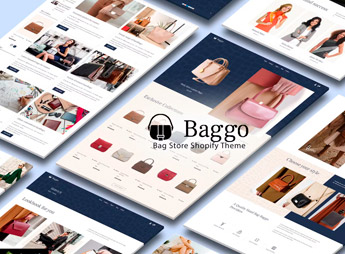
Baggo creates a Shopify store specializing in handbags, with a featured product grid, image zoom for material details, showcase sections for lines and collections, and a menu designed for navigation by handbag category. It’s ideal for those who sell handbags, backpacks, or leather accessories and need large, well-positioned photos to highlight material details, texture, and finish for a customer who hasn’t yet touched the product.
Baggo’s Main Features
- Product Image Zoom
Magnifies photos to show leather texture, stitching, and hardware up close. - Featured Product Grid
Organizes handbags by line or collection on the store’s homepage. - Handbag Category Menu
Separates backpacks, wallets, and handbags into their own submenus in the header. - Collection Sections
Reserves blocks on the homepage to showcase new releases and seasonal lines. - Responsive Layout
Automatically adjusts grid and images for mobile, tablet, and desktop.
Baggo’s Benefits
- Product Shown with Detail
The zoom reduces doubt about the finish before the purchase is finalized. - Navigation by Handbag Type
The customer goes directly to the category they are looking for without going through extra screens. - Mobile-Ready Store
Most fashion purchases happen on the customer’s mobile device today. - Fewer Returns Due to Doubt
Detailed material photos reduce exchanges for a different piece than expected.
Who is Baggo For?
- Those who sell handbags, backpacks, or leather wallets in their own store.
- Accessory brands that rely on detailed photos to sell.
- Those migrating from a marketplace to a dedicated Shopify store for handbags.
- Workshops and small leather brands that launch seasonal collections.
How to Download Baggo
Baggo is available for download here on Ultrapack. After downloading the file, go to Online Store > Themes > Add theme in the Shopify panel and send the ZIP package to install. The store is ready to receive photos and texts of the handbags.
Handbags are products that are sold by the eye on the detail, not just by the description. A generic fashion theme rarely reserves space for this type of zoom and organization by line, which makes a leather accessories store look like any other online storefront.
Frequently asked questions
Is Baggo – Responsive Shopify Bags Store Template GPL?
Yes. Baggo – Responsive Shopify Bags Store Template is distributed under the GPL (GNU General Public License). You may legally use, modify and redistribute it on as many sites as you want.
Can I use Baggo – Responsive Shopify Bags Store Template on more than one site?
Yes. You can use Baggo – Responsive Shopify Bags Store Template on as many sites as you want.
How much does Baggo – Responsive Shopify Bags Store Template cost at Ultrapack?
Baggo – Responsive Shopify Bags Store Template costs US$2.99 as a single purchase, and it is also included in the subscription plans starting at US$17/mo (Desenvolvedor I).
Does Baggo – Responsive Shopify Bags Store Template include updates?
When a new version of Baggo – Responsive Shopify Bags Store Template becomes available in the catalog, you can download the file during the access period of your purchase or subscription. To update, follow the installation or import procedure described in the documentation for the item and its platform.
Is Baggo – Responsive Shopify Bags Store Template checked before it is made available for download?
Files for Baggo – Responsive Shopify Bags Store Template are scanned before publication by UltraHub using ClamAV and YARA rules to detect known threats. This check does not guarantee the absence of risks. Check the item requirements, make a backup, and follow the installation or import instructions for its platform.
How to install
Updates: manual. When a new version comes out, download it on this same page and upload the new file from the Shopify admin. This item is not installed through WordPress.
A Shopify theme is not installed on WordPress. It is uploaded in your store dashboard.
- Download the file
elements-baggo-responsive-shopify-bags-store-template.zipand extract it on your computer. - Inside the package, look for the theme ZIP, which is the file Shopify accepts. It is usually in a folder named after the theme, and it has the
assets,layout,sectionsandtemplatesfolders inside. - In the Shopify dashboard, go to Online Store > Themes.
- Under Theme library, click Add theme > Upload zip file and upload the theme ZIP.
- Use Preview to check it, and Publish when you want it live.
- Shopify rejects packages that are too large. If the upload fails because of size, take the documentation and demo files out of the folder before zipping it.
Stuck on a step? Open a ticket telling us which one you stopped at.